
Ricoh India, the largest gainer among these pack, has rallied 192 per cent from Rs 294 to Rs 859 on the BSE so far in the current calendar year.

Broader market underperformed the headline indices
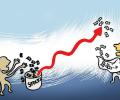
Small stocks made a dashing comeback in 2020 after delivering negative returns in the last two years as increased retail investor participation in pandemic times saw small-cap index surging up to 31 per cent and outperforming the bigger benchmark gauge. This year turned out to be eventful for the equity market, witnessing bearish and bullish sentiments at different points of time. While the initial part of COVID-ravaged 2020 saw the bears in full force amid concerns related to the pandemic and lockdowns hurting economic activities, bulls made a comeback towards the latter half of the year. As the market swayed with many lows as well as highs, small and mid-cap indices emerged as markets favourites in 2020.

RBI must balance the need for improving domestic bank credit demand and respond to lower inflation.

The Bank Nifty is likely to be a bellwether.

An expected withdrawal of FIIs from the market likely to weaken the rupee against the dollar.

The benchmark indices have rallied 28 per cent this year, while the broader market has outperformed

'We are in the middle of an unprecedented SIP revolution.' 'Monthly inflow through SIPs will be Rs 15,000 crore to Rs 20,000 crore soon.' 'Traditional avenues of Indian savings like bank fixed deposits, gold or real estate are no longer attractive to invest.'
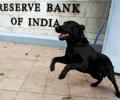
Any change in rates would mean more volatility; else, poll outcome-fuelled rally expected to continue.

The BSE Sensex gained 104.63 points to end at 33,147.13, while the broader Nifty spurted 48.45 points to finish at 10,343.80.

The 30-share Sensex stayed in the green for the better part of the session and hit the day's high of 38,297.70 as buying pace gathered momentum towards the fag-end.

The derivatives expiry on Thursday is also expected to add to the volatility.

The India growth story is still intact, and fall in the Indian stock markets is an imported one and if the government succeeds in legislating the GST and Land Bill, India could yet emerge as a winner believe stock market experts

Analysts expect global markets to remain in consolidation mode with a negative bias over the next six months.

Experts suggest domestic factors rather than the Greece crisis would determine the course of the Indian equities.

The rupee has been falling for five straight weeks, taking its losses this quarter to 6.6 per cent, making it the worst performing currencies in Asia during this period.

Experts say the BSE Sensex could rise to around 32,000 in a year.

The year 2014 has been one of the best for investors in the equity markets.

When selecting investments, pay attention to potential return, risk and how easily you can exit it.

It can be noted that the rupee lost nearly 7 per cent since the beginning of May as FIIs have pulled out nearly $4 billion from the domestic debt, as bond yields fell on expectation of RBI cutting rates on Monday.

A good monsoon could rein in food inflation. Largely good corporate results mean better days are ahead. Nifty may reach record levels, points out Devangshu Datta.

Global private equity major KKR has ranked India second among the emerging markets on external risks, citing the high fiscal and current account deficits.

'The variables to watch include the monsoon, resolution of NBFC liquidity issues, GST collections, and NPA resolution.'

But experts say downside limited, pockets of opportunities for investors

Sun Pharma was the best gainer among Sensex components, surging 6.91 per cent

The BSE Mid-Cap index was currently down 1.25%

The government will unveil the Consumer Price Index data and the Wholesale Price Index data for August on Monday.

Sanjay Mookim, India equity strategist at Bank of America Merrill Lynch, tells Puneet Wadhwa that this is not a time for investors to dabble in relatively small and illiquid stocks.

The Nifty has gained 2.6% so far this week, while the Sensex has climbed 2.85%

The company's investments in telecom business reached 15-20% of capital employed.

Among Sensex constituents, Vedanta fell 3.40 per cent, followed by SBI 3.17 per cent, Yes Bank 3.11 per cent, Axis Bank 1.68 per cent, ONGC 1.60 per cent, Power Grid 1.52 per cent and HDFC 1.48 per cent.

Nobutaka Kitajima, chief investment officer -- equity, LIC Nomura Mutual Fund, tells Business Standard the reaction to the Fed's statements has been overdone and the current downturn has punished certain stocks much more than their inherent economic worth and business potential.

In these times of global uncertainty, be cautious in selecting the right market and fund.

'India is still a cash economy.' 'For a common household, almost everything from grocery to maid services is paid in cash.' 'The demonetised notes account for 85 per cent of the currency in circulation.' 'Until fresh notes flow back into the economy, day-to-day transactions ordinarily done in cash will be impacted.'

However, volatility is likely to be on the rise, said Benjamin Yeo, MD & CIO (Asia & Middle-East) for Wealth & Investment Management, Barclays.

The market benchmark appears set to end 2013 on a positive note with a modest gain of over 7 per cent, but such gains are not to be seen in a majority of stocks available in the market, which predominantly include those of mid-size and smaller companies, shows an analysis of various indices.

In the near term, two key factors are the outcome of the monsoon season in respect to cropping yields; and the correction in the crude oil price.

HDFC twins, Axis Bank, ICICI Bank and SBI from the financial space gained between 1-2.7%.
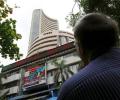
Premium valuations and lack of big triggers will weigh on Indian equity markets in the near term, believes Mahesh Nandurkar, India Strategist, CLSA.

'You need to devalue the currency, ignite inflation, which then begins to oil the wheels of the economy.' 'Without that this severe recession is not going to reverse.'
